
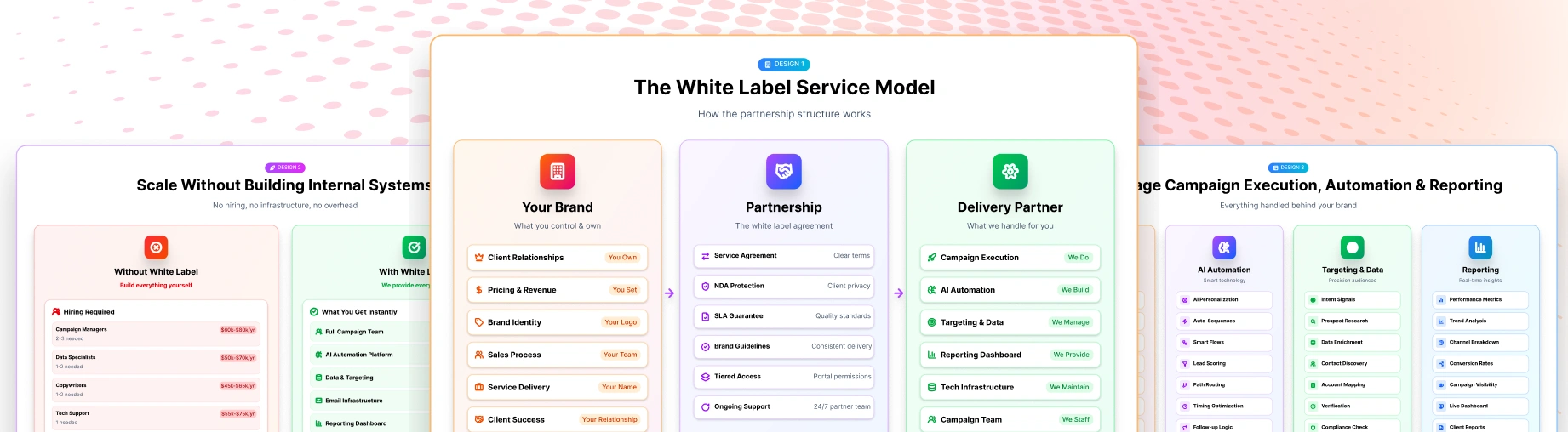
Most agency growth stories follow the same pattern. A new client comes on board, more resources get allocated, costs rise, and the margin stays roughly where it was before. Revenue grows but the business does not necessarily become more profitable. It just becomes larger and more complex to manage.
White-label lead generation, structured correctly, breaks that pattern entirely. When the delivery costs are fixed and the client revenue is not, the margin compounds as the client base grows. That is the commercial opportunity most agencies overlook when they evaluate white-label lead generation purely as a service addition rather than a structural shift in how their business scales.
Why Most Agency Revenue Models Hit a Ceiling
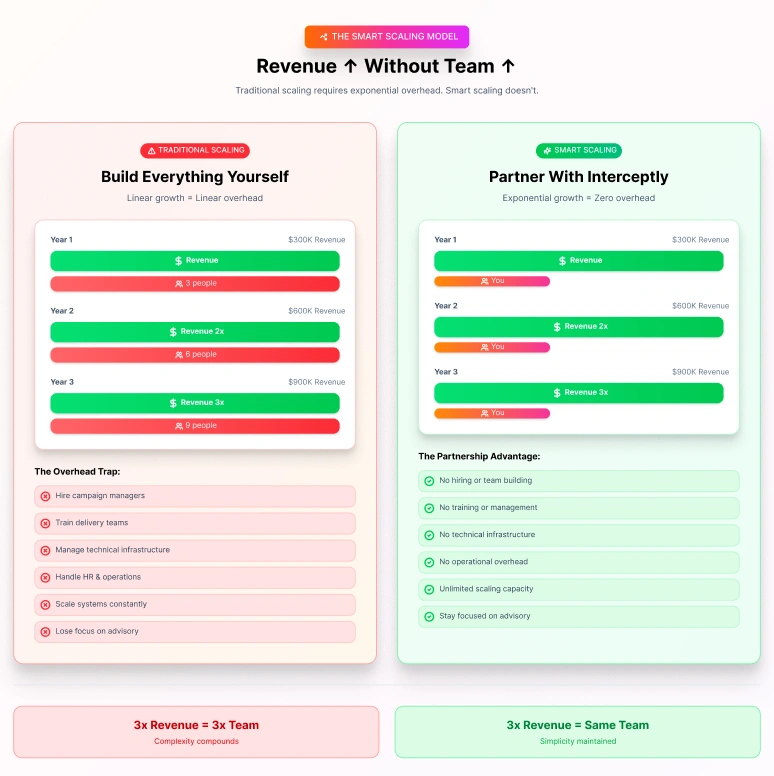
The standard agency model ties revenue directly to people. More clients means more staff. More staff means a higher cost base. The margin percentage stays roughly the same regardless of how much the top line grows because every new client brings a proportional increase in operational cost alongside it.
This is the ceiling most service businesses hit. Growth becomes a treadmill rather than a compounding advantage. Adding white-label lead generation to the service stack does not automatically solve this problem. The model behind the delivery is what determines whether the margin opportunity is real or whether it simply moves the cost problem from one column to another.
How White-Label Lead Generation Changes the Cost Structure
The fundamental shift that a managed white-label lead generation service creates is straightforward. Delivery costs become fixed rather than variable. The partner pays for the infrastructure and execution once, and that same infrastructure serves a growing client base without requiring proportional increases in cost. Each new client the partner onboards generates revenue that largely does not carry a corresponding increase in delivery cost.
The execution is already in place. The platform is already running. The team is already there. The cost of trying to build this infrastructure internally is what makes the managed model so compelling by comparison. The investment required to replicate what a fully managed white-label lead generation partner provides is substantial, and it scales with complexity rather than staying fixed.
What Fixed Delivery Costs Actually Mean in Practice
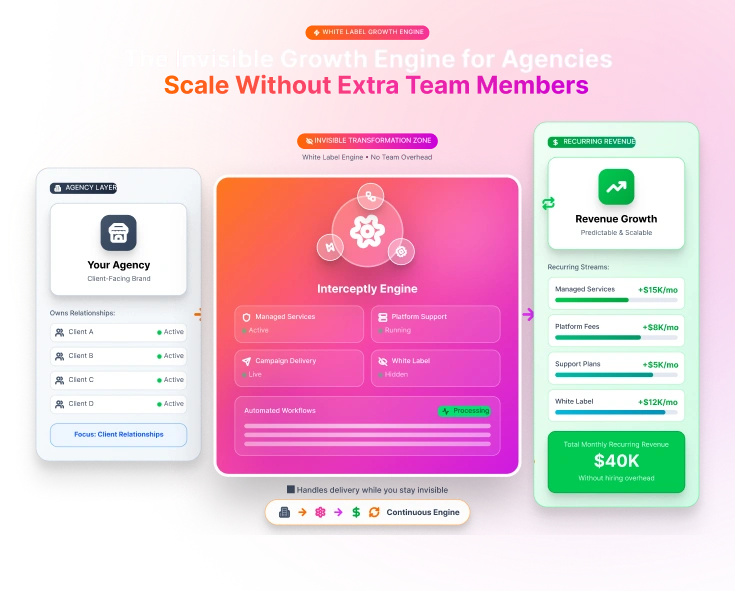
With Interceptly’s white-label lead generation service, the delivery operation is included as part of the partner arrangement. Campaign execution, the branded Campaign Performance Team, technical infrastructure, domain and mailbox management, deliverability monitoring, and ongoing optimisation are all handled by Interceptly’s team. None of those costs increase when the partner wins a new client.
The revenue from each new client account sits on top of a delivery cost that has already been committed. That is the structural difference between a managed white-label lead generation model and a DIY arrangement where every new client creates a new operational demand on the partner’s internal team. Partners set their own pricing. The gap between what a client pays and what delivery costs is where the margin lives, and that gap widens as the client base grows.
The Scalability That a Branded Delivery Team Creates
One of the most underestimated advantages of Interceptly’s white-label lead generation model is what the Campaign Performance Team makes possible from an operational standpoint. Every partner receives an Account Manager, a Campaign Performance Manager, and Support Executives who introduce themselves to clients under the partner’s brand name. That team handles the client-facing delivery across every account.
The partner does not need to hire account managers or campaign specialists as the client base grows. The delivery scales with Interceptly’s infrastructure rather than with the partner’s payroll. What a branded delivery team actually looks like in practice is one of the most underestimated parts of this model. It is not just operational support. It is the mechanism that makes scaling without headcount genuinely possible.
How Buyer Intent Data Protects the Margin Already Built
Margin in a white-label lead generation business is not just about keeping delivery costs fixed. It is also about keeping clients. An agency that loses clients at the same rate it wins them is not compounding its revenue, it is treading water. Client retention is directly tied to results. Agencies that deliver consistent, qualified pipelines keep clients longer and protect the recurring revenue that makes the margin model work.
Interceptly uses Signilio competitor intelligence to identify prospects who are actively engaging with competitors and researching solutions right now, rather than relying on cold lists that have no signal behind them. Better targeting produces better results. Better results produce longer client relationships. Longer client relationships protect and compound the margin that has already been built.
What the Revenue Model Looks Like for Interceptly Partners
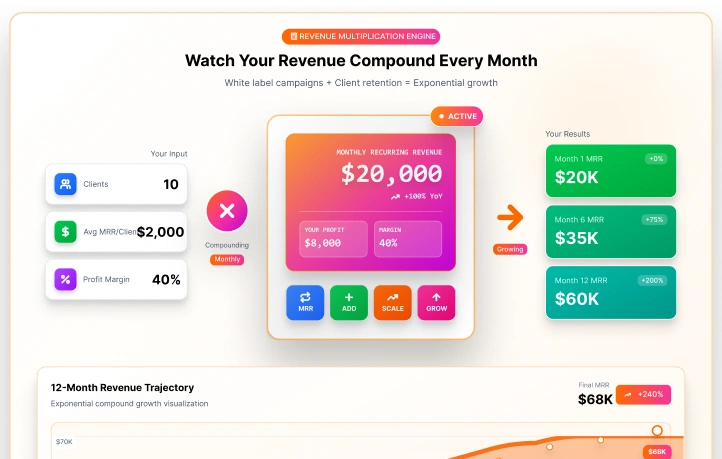
The partner revenue model is straightforward in structure. Partners own the client relationship and set their own pricing. Interceptly handles the delivery. The cost of that delivery is fixed and predictable regardless of how many clients are being served. As new clients are added, the incremental revenue largely flows through to margin because the delivery infrastructure is already in place.
Partners managing large client portfolios run everything from a single dashboard without adding internal headcount. The operational complexity stays flat while the revenue grows. Selling white-label lead generation without hiring internally is what makes this revenue model work at scale. The moment delivery requires a new internal hire for every few clients won, the margin advantage of the white-label model starts to erode.
Why the White-Label Lead Generation Market Rewards the Right Partner Choice
The margin opportunity in white-label lead generation is genuine, but it is not automatic. It depends entirely on the structure of the partnership chosen. A software-only white-label arrangement does not create fixed delivery costs. It creates variable internal costs that grow alongside the client base, because someone inside the agency still has to run the campaigns.
The margin model only works when delivery is genuinely managed and genuinely fixed in cost. Why the platform alone is never enough is the question every agency should answer clearly before committing to a white-label lead generation partner. The answer determines whether the margin opportunity is real or whether it disappears the moment growth puts pressure on the operation. Interceptly is built around the model where it stays real.
The Revenue Grows. The Operational Cost Does Not.
The margin opportunity in white-label lead generation compounds when the delivery is fixed and the client base is not. Interceptly’s model is structured precisely around that outcome. Fixed delivery costs, a branded execution team, buyer intent targeting, and a platform built to handle a growing portfolio from a single dashboard.
For digital agencies, sales consultants and lead generation providers who want to build a white-label lead generation service where margin grows alongside revenue, the Interceptly partner programme is the place to start.