
Are you struggling to find new ways to reach potential customers with your cold outreach program? Connecting with people who know nothing about your existence can be challenging, but not impossible. You have a strong chance of attracting new clients even when countless companies compete for their attention. But how?
Email and LinkedIn are two channels businesses have consistently used to initiate contact with prospective clients. If you’re new to email marketing, social media marketing, and LinkedIn outreach automation, this article will guide you through effective cold outreach strategies and best practices to turn strangers into buying customers using AI-powered automation that delivers 70%+ increases in leads.
What is Cold Outreach?
Cold outreach is the process of initiating contact with potential prospects who are totally or partially unaware of your company or products. It’s typically executed through marketing campaigns such as email, direct mail, telemarketing, or a combination of these channels enhanced by marketing automation tools.
Email and LinkedIn cold outreach differ from traditional selling. Instead of connecting with prospects at their request, you initiate contact and provide information about your product to convert them into customers using automated lead generation strategies. When done correctly with LinkedIn-safe automation protocols, SDRs and BDRs can achieve 10x higher reply rates with multi-channel approaches.
What Makes LinkedIn Messages Different From Cold Emails?
LinkedIn is a social network where people are more likely to respond to connections they know and trust. To build that trust, you need to deliver value through your LinkedIn messages using safe automation that mimics human behavior patterns. Email, on the other hand, is a communication channel businesses use to find new customers and penetrate new markets through outreach automation.
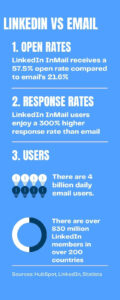
(Sources: Snov, LinkedIn, HubSpot, Statista,)
Here are key differences between LinkedIn and cold emails:
Engagement: Most people receiving cold messages may not read them if they don’t know the sender. Cold emails are often viewed as junk, getting ignored, deleted, or marked as unwanted because they come from strangers without personal connections to recipients.
LinkedIn outreach messages capture leads’ attention more effectively because of the platform’s professional reputation. People expect business-related communications on LinkedIn, so messages from business professionals naturally catch their attention, especially when using LinkedIn automation tools with safe daily limits that prevent account restrictions.
Personalization: Most cold email outreach strategies end up in prospects’ junk boxes. The sender barely knows the person they’re reaching out to or whether they’d be interested in the product or service. LinkedIn messages appear more personalized since senders have access to more information about their connections than they would about email recipients. AI-powered solutions like AI Intros can enhance this personalization at scale while maintaining authenticity.
Cold emails often come across as impersonal, which turns off the majority of recipients. They’re sent from one person to another without any context or relationship. LinkedIn’s communication format is much more personal than email because it’s a message in their inbox rather than an email from an unfamiliar address.
In short, a connection request on LinkedIn is easier to engage with than an email recipient, provided that you have something valuable to offer through strategic LinkedIn lead automation that’s GDPR-compliant and follows LinkedIn’s Terms of Service.
The Email as a Cold Outreach Channel
According to statistics, there are more than 4 billion email users worldwide, with the majority of internet users having access to email accounts. This makes cold email outreach a viable marketing option powered by sales automation tools. However, how effective can it be for sales managers and business development teams?
Email Outreach: The Good, the Bad, and the Ugly
Email marketing is one of the best ways to keep in touch with your audience and build new relationships. With email automation, companies can create highly-targeted, cost-effective campaigns and get their message out to the world. Whether marketing your business, product, or service, you can use email marketing to reach your target audience wherever they are, saving hours each week on manual outreach.
The Good: Easy and Instant
If you’re looking to reach out and engage with customers or prospects, email is probably the easiest channel. It’s one of the most popular and efficient customer communication channels, enabling you to communicate almost instantly with more people in a personalized manner through marketing automation tools. For SDRs handling multiple accounts, email automation is essential for scaling personalized outreach.
The Bad & The Ugly: Endless Unwanted Messages and Fake Accounts
While email is a well-known communication channel, it’s often abused and misused. There are endless unwanted emails, distribution lists with fake users, and dubious links. Sometimes, it’s hard to reach genuine recipients via email. New filters and advanced detection algorithms may work against you and make it harder to reach genuine recipients, which is why automated lead generation with proper email warm-up and CAN-SPAM compliance is essential.
LinkedIn as a Cold Outreach Channel
The world of social media is evolving rapidly. Where once the focus was on establishing profiles, posting photos, and sharing articles, things are moving in a much more business-oriented direction, enhanced by LinkedIn automation that’s safe and effective.
So how can you use LinkedIn to connect with professionals you wouldn’t usually reach without risking account restrictions?
Create and Maintain a Professional Presence
One of the most important aspects when using any social media channel is having a professional presence. This is especially critical on LinkedIn, as most people consider it a business-oriented platform. Make sure your profile information is clear and concise, highlighting your skills and the value you can bring to other professionals. Sales directors and consultants particularly benefit from optimized profiles that attract the right connections.
Find Potential Contacts Through Search
If you’re looking to find new contacts on LinkedIn, use the search function to find people you share something in common with. For example, if you’re a real estate agent, you might find people interested in moving to a new home. Use search terms like “house hunting,” “moving,” and “new homeowners,” then sort results to find people who might be interested in connecting with you. LinkedIn lead automation tools with access to 230M+ verified B2B contacts can streamline this process significantly while staying within safe daily limits.
The Good, Bad & the Ugly
There are plenty of good reasons to use LinkedIn as your main channel for reaching out to new contacts. However, social media networks are not one-size-fits-all. There are certain drawbacks to using LinkedIn that you need to be aware of before diving in.
The good: You have access to verified professionals who work in your niche. LinkedIn is used by people at all career stages, so there’s a strong chance you’ll find the right person for your campaign using AI-powered automation targeting that analyzes profiles and identifies qualified decision-makers. Solopreneurs and agencies particularly appreciate the access to 12M+ company profiles with firmographic data.
The bad & the ugly: Most people are extremely cautious when they’re on LinkedIn. They’re used to receiving marketing pitches, so you need to be careful about what you say. It’s very easy to come across as pushy or untrustworthy if you don’t follow guidelines. If your message reads like you have nothing to offer, you’re unlikely to get a response.
Overall, cold email outreach and LinkedIn outreach automation can be intimidating at first if you’re not sure where to start. Research and plan carefully. Make sure you’re sending personalized messages and asking questions that show you’ve done your research using sales automation best practices. The key is using LinkedIn-safe automation protocols that won’t get your account banned.
Combining Email and LinkedIn for Cold Outreach
Reaching new customers is an ongoing process. As tactics change, your B2B outreach must stay intentional and adaptable. Use every available resource to find new contacts and pipelines. With marketing and process automation, multi-channel campaigns can unlock new opportunities and deliver up to 10x higher reply rates.
Here’s how you can combine email and LinkedIn outreach automation to meet your business objectives:
Create a Calendar of Events
There are many conferences, summits, and events in your industry every year. Getting to these events, both as an attendee and presenter, is a great way to meet people. If possible, launch your events, share your knowledge, and build your reputation in your field. BDRs and sales teams can leverage these connections through automated follow-up campaigns.
Measure Your Results
Marketers constantly test ads and outreach to see what works. Start by creating multiple LinkedIn and cold email templates, then measure results using sales automation tools. Track connection acceptance, response rates, and booked meetings to identify winning campaigns and continuously optimize performance.
Use Your Current Network to Find New Connections
Your current network may know other people interested in your business. You can use these connections to find more people to outreach to through LinkedIn lead automation. This can be as simple as asking your network to let you know if they know anyone who would benefit from your products and services.
Write a Blog Post and Invite People to Read It
If you don’t have the time or resources to create a full-blown outreach campaign, don’t fret. You can write a blog post and invite people to read it through email or LinkedIn. Once you have a blog post published, you can spread the word further through social media and automated lead generation campaigns that save hours each week.
Diversify Your Channels
Expanding your outreach means diversifying channels beyond cold email. Review your prospect list and engage people through their preferred channels, such as LinkedIn, text, calls, or direct mail. Marketing automation tools make this manageable. Multi-channel outreach consistently delivers up to 10x higher reply rates than single-channel strategies.
Personalize Your Message with AI
Once you’ve identified an ideal prospect, send a personalized LinkedIn or email outreach message. Use their name, introduce your business, and avoid generic templates. The message should feel human and relevant. AI-powered tools like AI Intros personalize outreach at scale by analyzing profile data and buyer intent signals.
Follow-Up with Smart Automation
After sending LinkedIn or email messages, the next step is smart follow-up. You want to stay visible without overwhelming prospects or waiting endlessly for replies. A simple follow-up after one week works well, followed by another email a week later if there’s no response. Avoid overdoing it.
Outreach automation tools with AI Inbox Tagging use sentiment analysis to prioritize hot leads, so you know who to follow up with and when. By following sales automation best practices and using GDPR-compliant data, you can follow up professionally, make a strong impression, and show genuine interest without risking annoyance.